
Panic Exit Device Installation in Harbor City, CA
Harbor City · ZIP 90710 · Harbor Area · Magnetic Locks & Electric Strikes
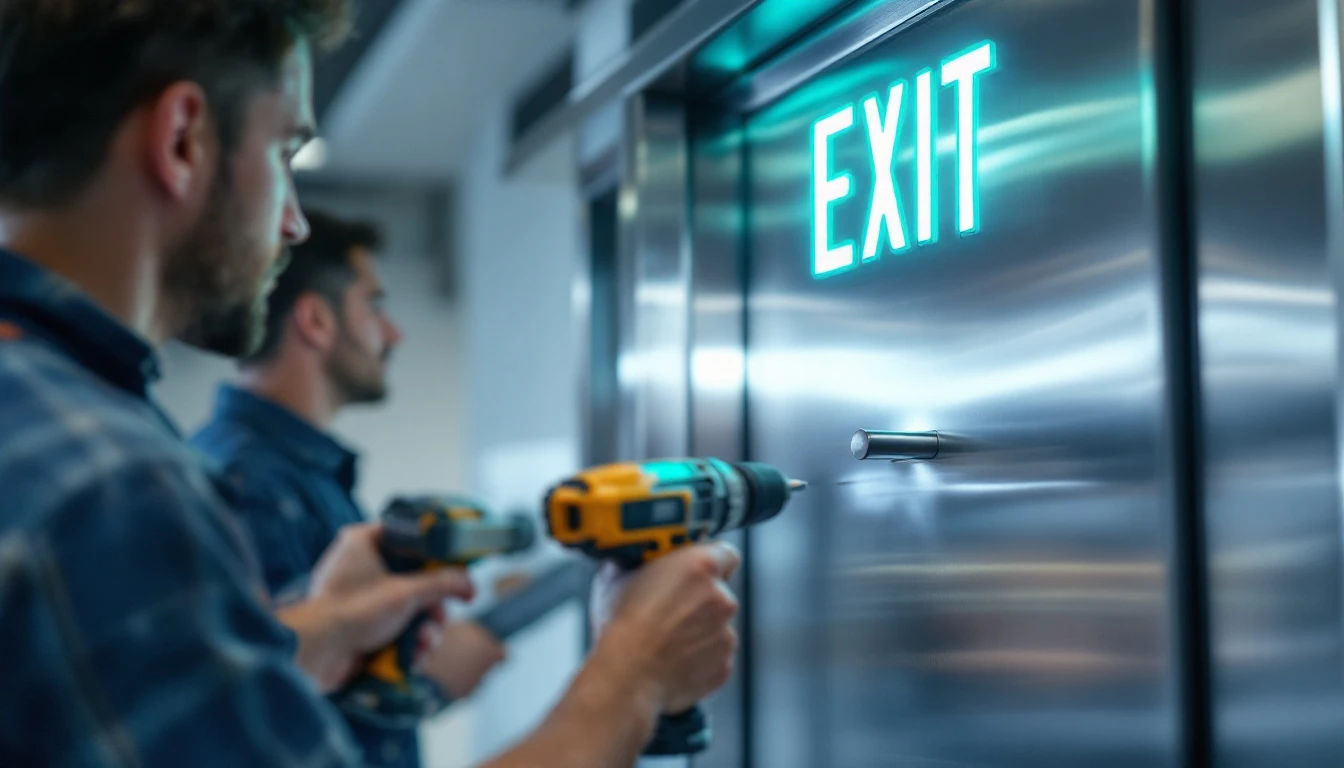
If you need panic exit device installation in Harbor City, you want a qualified low-voltage contractor who shows up with the right hardware on the truck — not a national call center that flips your job to the lowest bidder. Los Angeles Access Control builds and supports entry systems all over Harbor City and the surrounding communities, and each project is handled by our employed technicians, start to finish.
Estimates are free, every price is written down before we start, and labor and parts are warrantied. Dial (888) 917-9811 — we're available Sunday–Thursday 6:30 AM–11:30 PM and Friday 6:30 AM–4 PM.
Panic exit device installation built for Harbor City
Harbor City lies in the Harbor Area, and it's part of our daily service routes. Whether your property is near the Harbor City Kaiser campus and Normandie Avenue, and anywhere along the I-110, our technicians show up already familiar with the construction styles typical of the 90710 area — everything from frameless glass entries to steel man doors — so the right brackets, strikes and readers are on the truck before we knock.
In addition to Harbor City, the same team handles Lomita, Wilmington, Carson and San Pedro, which means multi-site owners get a single point of contact across every site: (888) 917-9811.
Avoid these common missteps
Closed systems. Certain platforms handcuff you to one company forever. Always ask: "who else can work on this?"
Undersized power. The most common root cause of flaky systems we're called to fix — proper sizing with battery backup prevents years of mystery faults.
Old cards left active. Takeovers that don't purge unknown credentials inherit every old risk. A credential audit belongs in every takeover.
Pricing without a site visit. The unknowns get billed later or botched. A real survey protects you — ours are free.
Security that traps people. A maglock without compliant release mechanisms is a violation and a liability. Compliance has to be in the design, not patched after.
Where panic exit device installation makes the biggest difference
Schools and churches — for which the system is tuned to traffic patterns, user counts and liability exposure, down to schedules and alert rules.
Restaurants and bars — a property type we've equipped many times across LA County, with proven hardware packages ready to quote.
Storefronts and retail — where we tailor the way the space is actually used, down to schedules and alert rules.
Office buildings — where we tailor traffic patterns, user counts and liability exposure, down to schedules and alert rules.
Have an unusual building? Odds are we've equipped one like it — from marinas to machine shops. Call (888) 917-9811 and we'll talk through options.
What to expect when you hire us
1. Site survey. One of our techs surveys the property with you, documenting door and frame construction, existing wiring, power availability and network paths. This produces a detailed proposal — not a guess.
2. Engineering. We match specific hardware per door, size power supplies with battery backup, plan controller and network locations, and verify life-safety compliance up front.
3. The install. Our own employees — not subcontractors — run cabling cleanly, fit hardware precisely, and work around your business hours so your operation never stops.
4. Programming. Credentials are enrolled, time zones and holidays programmed, alerts configured, and any integrations brought online.
5. Testing and training. Every credential is tested at every relevant door, and whoever manages the system gets real training — with documentation left on site and on file with us.
6. Ongoing support. We keep your as-builts, programming records and parts list on file, so any tech we send already knows your site. Maintenance plans are available but never required.
Signs it's time for panic exit device installation
People prop doors to avoid fumbling with keys — and a propped door defeats every lock you own.
Something went missing and the entry log is a shrug — audit trails are the first thing investigators and insurers ask for.
An auditor wants access records you don't have — documented access control is becoming table stakes in many industries.
Nobody can say how many keys exist for your doors — each one is standing access you can't revoke.
Your existing system is down more than it's up — the repair-versus-replace math eventually flips.
One of these alone is reason enough to call; two or more mean you're already carrying risk. A phone consult costs nothing: (888) 917-9811.
System choices, compared honestly
Standalone hardware sits at the budget end: fine for a storage room or a single office door, though it leaves you without real records or remote control.
Networked on-premise systems put every door on one brain: rich features, deep integrations, no subscriptions, but someone has to own that server, its backups and its updates. Best for facilities that already have IT staff.
Cloud platforms trade a subscription for zero infrastructure: credentials, schedules and logs live in a web dashboard, failover keeps doors working through internet outages. For most LA businesses this is the default recommendation — unless your situation argues otherwise.
Unsure which fits? The free site survey settles it — we'll recommend the cheapest option that actually solves your problem, with reasoning you can hold us to. (888) 917-9811.
Search terms that lead here — and why
However you got here — searching "emergency exit door push bar", "crash bar installation", "push bar for glass door" or something close — the service behind the words is identical: a licensed technician, the right hardware, and a system commissioned to code in Harbor City.
Related work we handle under the same roof spans panic bar with exterior lever, panic bar installation cost, fire rated panic bar installation, push bar installation near me and push bar installation cost. Combining these in a single project beats hiring for them one at a time — shared labor, shared wiring, one warranty.
Why Harbor City calls us first
No vendor lock-in. Open standards mean you own your system — and our service keeps you with us by choice, not contract.
Transparent pricing. The number you approve is the number you pay. No surprise line items.
Backed work. Every installation carries labor and parts warranties, honored fast.
A real local company. Based at 189 The Grove Drive in Los Angeles, with techs living and working across the county. When something needs attention, we're minutes away — not a ticket queue in another state.
Specialists, not generalists. Entry systems are our entire business — not a line item for a general electrician.
Hours that match emergencies. Open Sunday–Thursday 6:30 AM–11:30 PM and Friday to 4 PM. Entry failures don't respect business hours, so neither do we.
Jargon decoded
Anti-passback — a rule preventing a credential from entering twice without exiting, used in parking and high-security zones.
OSDP — an encrypted, supervised successor to Wiegand that resists skimming and tamper.
Door position switch (DPS) — a sensor reporting whether the door is physically open or closed, the basis for propped-door and forced-entry alerts.
Request-to-exit (REX) — the sensor or button that releases a locked door from inside so egress is always free.
Fail-safe vs. fail-secure — what a lock does when power drops: fail-safe unlocks (maglocks), fail-secure holds (typical for perimeter security). Each opening gets the right one per code and risk.
Access level — which doors, at which times, for which users. Good access-level design is the difference between a tidy system and chaos.
What "secure" actually requires
Weak points get found: a maglock on a door whose glass sidelite opens with a rock, or a secured front door beside a propped loading dock, is theater. Part of every survey is walking the whole perimeter, so budget goes to actual risk, not visible risk.
Think about failure modes before they happen: what happens in a blackout, a network outage, a fire alarm, an earthquake — each has a correct, code-driven answer that gets engineered in, tested during commissioning, not during the real thing.
Pricing factors for panic exit device installation
Honest answer: it depends on the opening count and conditions — but it's knowable fast. Cost is driven by: number of doors or gates, door and frame construction, how far and how hard the cable runs are, credential technology, and the locking hardware each opening needs.
As a ballpark: one standalone door is the least expensive configuration; networked multi-door systems scale per opening; cloud platforms shift spend toward subscription; and gates, intercoms and integrations are priced per device. Your exact number comes from a free survey — book at (888) 917-9811.
Common Harbor City panic exit device installation problems — solved
Storefronts cited for non-compliant egress. This one comes up weekly — so the repair includes the reason it failed.
Double doors with no code-legal exit hardware. This one comes up weekly — and our fix addresses the root cause, not the symptom.
Back doors chained or deadbolted shut. Correct design removes this risk — usually within one scheduled visit.
Exit-only doors that still need outside key access. Correct design removes this risk — usually faster than owners expect.
Recognize one of these? Call (888) 917-9811 and describe the symptom — we can often diagnose over the phone, saving you time on site.
The technology behind the system
Our bench covers the industry's main platforms: HID readers and credentials, Brivo and Avigilon Alta (Openpath) cloud access control, DoorKing and ButterflyMX entry systems, Axis door controllers, and the trusted locking brands — Von Duprin, HES, Securitron, Schlage. Brand choice follows your building's needs, never to a sales quota.
On the wire side, OSDP is replacing Wiegand — supervised, encrypted reader communication that resists skimming and cut-wire attacks. If your readers are recent, the upgrade may be mostly configuration; ask us whether your wiring qualifies.
Response times and scheduling in Harbor City
Our county-wide routing works in your favor, someone is rarely far from Harbor City. Repairs are typically same- or next-day; installs generally begin within days of approval. You'll get real availability on the first call, not a callback.
The job doesn't end at the invoice: your documentation stays on file, warranty support is a phone call, and future additions quote quickly because we already know your site.
Exactly where we work in and around Harbor City
In Harbor City we cover all of ZIP code 90710 — including the areas near Pacific Coast Highway to the Harbor City Kaiser campus, out to Normandie Avenue. Storefronts, offices, multifamily buildings and homes alike see the same technicians and the same pricing, reached via the I-110 and PCH.
Bordering communities get identical coverage: Lomita, Wilmington, Carson, San Pedro and Rolling Hills Estates. Owners with properties in more than one of these areas consolidate them under one service relationship — a single point of contact: (888) 917-9811.
Built to code — fire, egress and ADA
If a bidder never mentions egress, keep interviewing. Maglocks in particular carry strict egress requirements: layered release mechanisms under state code. We design to pass inspection the first time — and we pull permits where required.
Documentation is part of compliance: riser diagrams and test logs are delivered and kept on file, which keeps inspections and insurance reviews painless.
The scope of our panic exit device installation work
The work includes it all — rim-type panic bars and fire-rated panic hardware, down to exterior lever and pull trims and electric latch retraction kits. Because a single crew handles hardware, low-voltage wiring and software alike, there's no finger-pointing between trades.
Every entry point gets components chosen for its actual door and frame: locking devices selected around life-safety code, weather- and vandal-rated readers where needed, and supervised power with backup batteries. That matching step is where cut-rate installs go wrong — ours are built to run for a decade.
Panic Exit Device Installation in Harbor City: FAQs
What happens to my system if your company weren't around?
We invite that question: open platforms, delivered documentation and your own admin access mean any qualified integrator could take over. We earn retention through service, not hostage-taking.
Can you integrate with cameras, alarms or my property software?
Yes — video, intrusion, elevator and PMS integrations come up on most projects. We'll inventory what you have and tell you exactly what can talk to what.
What happens when an employee or tenant leaves?
You deactivate the fob, card or phone credential instantly — no rekeying, no lock changes, no cost. That single capability usually pays for the system.
What brands do you install?
Industry-standard platforms including HID, Brivo, Avigilon Alta (Openpath), DoorKing, ButterflyMX and Axis, plus locking hardware from Von Duprin, HES, Securitron and Schlage. We spec to your building, not to a quota.
Is panic exit device installation disruptive to my business while it's installed?
Rarely. Openings are kept functional during the day, schedule noisy or door-down phases around your hours, and leave the site clean daily. Most of our work happens in occupied, operating buildings.
Are you licensed and insured?
Yes. Los Angeles Access Control operates as a licensed and insured contractor working across Los Angeles County, including permitted work where your city requires it.
Do you work on occupied buildings without disrupting tenants?
Yes, most of our work is in occupied buildings. Doors stay usable during the day, noisy work is scheduled considerately, and tenants get notice through management.
Do you offer maintenance plans?
Yes — preventive visits covering batteries, firmware, testing and documentation, on terms you can cancel. No plan is ever required — the install is built to last regardless.
How fast can you schedule panic exit device installation in Harbor City?
The majority of service calls are scheduled same-day or next-day, and new installations typically begin within days of an approved quote. Phones are answered Sunday–Thursday 6:30 AM–11:30 PM and Friday to 4 PM at (888) 917-9811.
Can I manage the system from my phone?
On modern cloud systems, absolutely: unlock doors remotely, grant visitor access, review events and get alerts from any browser or the mobile app. We'll show you a live demo before you decide.
Do you give free estimates?
Yes — site surveys and quotes are free and carry no obligation. The quote lists actual equipment and a locked price before any work begins.
Can you service a system another company installed?
Usually, yes. We take over orphaned and legacy systems — identifying the hardware, recovering or resetting programming, and documenting everything properly so you're no longer dependent on whoever vanished.
Will the doors still open if the power goes out?
Yes, that's engineered in. Egress is always free: hardware is selected per code so people can always exit, and battery-backed power rides through typical outages. We test exactly this during commissioning.
Do you handle both installation and ongoing service?
Yes — that's central to how we work. The company that installed your system services it, which makes every future visit faster.
How long does an installation take?
One door: usually a day. Multi-door projects run from a few days to a few weeks depending on count and conditions — the timeline is part of your written proposal, and we keep to it.
More Magnetic Locks & Electric Strikes in Harbor City
Panic Exit Device Installation in nearby cities
Explore
Book panic exit device installation in Harbor City
Licensed, insured and local. Fast scheduling across Los Angeles County — written quotes, warrantied work.
Call (888) 917-9811Sun–Thu 6:30 AM–11:30 PM · Fri 6:30 AM–4 PM