
Proximity Card Access Control in Monterey Park, CA
Monterey Park · ZIP 91754, 91755 · San Gabriel Valley · Access Control Systems
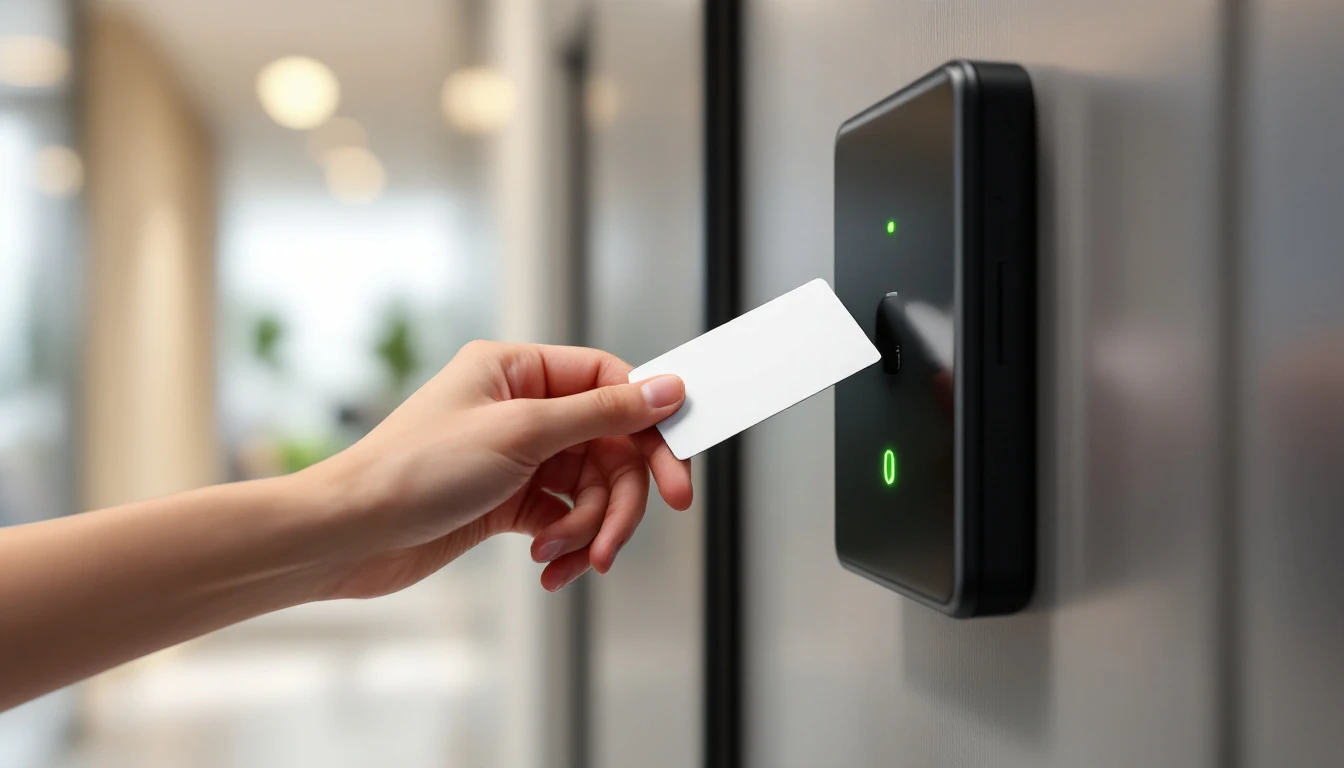
Los Angeles Access Control handles professional proximity card access control to commercial and residential properties in Monterey Park. From survey to sign-off, one local team handles the complete project — hardware and software alike.
Estimates are free, pricing is put in writing before work begins, and our workmanship is warrantied. Dial (888) 917-9811 — we're available Sunday–Thursday 6:30 AM–11:30 PM and Friday 6:30 AM–4 PM.
Serving Monterey Park and the San Gabriel Valley
Monterey Park sits in the San Gabriel Valley, and our techs work here weekly. Whether your property is near East Los Angeles College nearby and Atlantic Boulevard, or anywhere along the I-10, we arrive already familiar with the building stock common to the 91755 area — everything from frameless glass entries to steel man doors — so the right brackets, strikes and readers are on the truck before we knock.
Operators with buildings in nearby Alhambra or San Gabriel can put their whole portfolio under one service relationship — same techs, same documentation, same response times across the San Gabriel Valley.
A quick glossary
Request-to-exit (REX) — hardware that detects someone leaving and releases the lock so exit never requires a credential.
Fail-safe vs. fail-secure — what a lock does when power drops: fail-safe unlocks (required for some egress doors), fail-secure stays locked (most strikes). Each opening gets the right one per code and risk.
Access level — which doors, at which times, for which users. Most messy systems are really access-level design failures.
Credential — the thing you present: fob, badge, code, smartphone or biometric. Modern encrypted credentials resist the cloning that plagues older prox cards.
Door position switch (DPS) — a sensor reporting whether the door is physically open or closed, enabling held-open and forced-door alarms.
OSDP — an encrypted, supervised successor to Wiegand closing known attack paths on the reader wire.
The issues that bring customers to us
Legacy readers failing intermittently. A properly engineered system eliminates this entirely — usually faster than owners expect.
Badges that stop reading. It's among our most common calls — and the repair includes the reason it failed.
Lost cards that can't be deactivated. We see this constantly — so we correct the underlying design, not just the broken part.
Cloned low-frequency cards. The right hardware and programming make this a non-issue — often in a single service visit.
These calls rarely wait well: a door that fails unlocked is a security hole, and one that fails locked is a code violation. Same-day and next-day appointments are usually available at (888) 917-9811.
How a proximity card access control project works
1. Walkthrough. We evaluate every door, gate and opening in scope, noting door and frame construction, existing wiring, power availability and network paths. This produces a detailed scope and quote — with real model numbers.
2. Design. We match specific hardware per door, calculate power budgets, map panel locations, and confirm fire and egress code compliance before anything is ordered.
3. The install. In-house technicians — never day labor — pull and label every cable, fit hardware precisely, and work around your business hours so your operation never stops.
4. Programming. Users, schedules and access levels are configured, auto-lock and unlock schedules set, alarm behaviors tuned, and integrations (video, intercom, elevator) connected.
5. Testing and training. Every credential is tested at every relevant door, and whoever manages the system gets real training — plus written documentation.
6. Ongoing support. Your system's documentation lives in our service records, which means future service calls are fast. Preventive maintenance plans are offered without lock-in contracts.
The security details that separate good installs from bad ones
A reader on the wall isn't security by itself. What decides it: can the lock wiring be reached from outside? will a propped door raise an alarm? Are credentials encrypted or clonable? does the system ride through power cuts? Every one of those questions has a deliberate answer in our designs.
The log is half the value: held-open alerts, forced entries, credential misuse patterns reach the right person in real time, instead of being discovered in a log after the loss. We configure alerting as part of commissioning, not as an upsell.
How to know you need this now
Something went missing and the entry log is a shrug — audit trails are the first thing investigators and insurers ask for.
An auditor wants access records you don't have — controlled, logged entry is increasingly a requirement, not a luxury.
Each departure means another rekey bill — electronic credentials turn that into a ten-second software change.
Doors get propped because entry is inconvenient — convenience failures become security failures.
Your existing system is down more than it's up — past a point, stabilizing legacy hardware costs more than replacing it.
Any one of these justifies a conversation; stacking several means the risk is live. The call is free: (888) 917-9811.
What Monterey Park owners type into the search bar
People describe this work a dozen different ways: some search "proximity reader installation" while others try "employee badge entry system", others look for "RFID door entry system" and "proximity card access control". They're all asking the same question — who can design, install and stand behind this in Monterey Park — and this page exists to answer it: Los Angeles Access Control, (888) 917-9811.
Related work we handle under the same roof includes key card system installation, RFID reader installation, key card access control, card reader installation and smart card access control. Combining these in a single project beats hiring for them one at a time — shared labor, shared wiring, one warranty.
The reasons customers stay with us
One trade, deep focus. Entry systems are our entire business — not a sideline bolted onto an alarm company.
A real local company. Headquartered at 189 The Grove Drive in Los Angeles, with techs living and working across the county. Service calls get a truck, not a ticket number.
No vendor lock-in. Open standards mean you own your system — though most customers never want anyone else.
Long hours, real answers. Available Sunday–Thursday 6:30 AM–11:30 PM and Friday to 4 PM. Because locked-out tenants and failed storefront doors can't wait until Monday.
Backed work. Labor and manufacturer warranties on everything we install, honored fast.
Written, flat quotes. Prices are quoted in writing before work starts. Change orders only happen when you change the scope.
Which route fits your property?
Standalone systems suit one or two doors with simple needs: a coded lock or single-door controller, no network, minimal cost. The trade-off is management — changes happen at the door, and there's little or no audit trail.
Server-based systems centralize control in a local panel or server: powerful and subscription-free, but someone has to own that server, its backups and its updates. They shine in facilities that already have IT staff.
Cloud-managed systems have become our most-requested configuration: remote unlock, instant credential changes and automatic updates with no server to babysit. The subscription is the trade, and for most owners it replaces costs they were already paying in service calls.
Unsure which fits? That's what the free survey answers — we'll recommend the cheapest option that actually solves your problem, and put the reasoning in writing. (888) 917-9811.
The scope of our proximity card access control work
Our scope covers everything from smart card readers to badge printers and credentials, down to encoder stations and proximity card readers. Because one team handles hardware, low-voltage wiring and software alike, accountability never splits.
Every entry point receives hardware matched to its construction: locking devices selected around life-safety code, readers rated for the environment, and supervised power with backup batteries. That matching step is where cut-rate installs go wrong — ours are built to run for a decade.
Understanding the investment
Two identical-looking buildings can price very differently since conditions behind the walls differ. That's why we quote from a real site walk, not a phone script — so the figure you approve is the figure you pay.
As rough orientation: one standalone door is the least expensive configuration; networked multi-door systems scale per opening; cloud platforms shift spend toward subscription; and gates, intercoms and integrations are priced per device. Your exact number comes from a free survey — book at (888) 917-9811.
Typical applications
Corporate offices — for which the system is tuned to the way the space is actually used, down to schedules and alert rules.
Hospitals and clinics — one of our most frequent project types, with proven hardware packages ready to quote.
Hotels — where the system is tuned to traffic patterns, user counts and liability exposure, from credential policy to door schedules.
Universities — for which we tailor traffic patterns, user counts and liability exposure, down to schedules and alert rules.
Have an unusual building? Odds are we've equipped one like it — from houses of worship to film stages. Call (888) 917-9811 and we'll talk through options.
Life-safety and code requirements
If a bidder never mentions egress, keep interviewing. Electromagnetic locks especially are tightly regulated: sensor release, auxiliary push buttons, fire-alarm disconnects and time delays under state code. Our installations pass inspection because they're designed for inspection — permits included where the AHJ requires them.
ADA matters too: reader mounting heights, operating force, auto-operator coordination and clear floor space shape where and how devices mount. Getting it right during design costs nothing; retrofitting it after a complaint is expensive.
Response times and scheduling in Monterey Park
Because technicians cross the county daily, someone is rarely far from Monterey Park. Repairs are typically same- or next-day; installs generally begin within days of approval. The dispatcher who answers knows the schedule in real time.
Follow-through is where contractors are measured: warranty visits get the same priority as new sales, and your site records mean any of our techs can pick up where the last left off.
Exactly where we work in and around Monterey Park
In Monterey Park we cover all of ZIP codes 91754 and 91755 — including the areas near Atlantic Boulevard and Garvey Avenue, and East Los Angeles College nearby. Commercial corridors, residential streets and industrial pockets alike get the same response standard, with quick access via the I-10 and SR-60 and I-710.
Beyond the city line, we're equally active in Alhambra, San Gabriel, Rosemead, Montebello as well as El Sereno. Routes frequently chain these areas together, which is part of why response here stays fast.
Equipment standards we trust
Credential technology matters more than most owners realize: legacy 125 kHz prox cards can be cloned at a mall kiosk, while 13.56 MHz smart credentials and mobile credentials use encryption. Part of every survey is a frank read on your current credential security.
On the wire side, OSDP is replacing Wiegand — supervised, encrypted reader communication that resists skimming and cut-wire attacks. Most modern readers support it already; ask us whether your wiring qualifies.
Avoid these common missteps
Old cards left active. An upgrade that keeps the old database keeps the old holes. A credential audit belongs in every takeover.
Undersized power. The most common root cause of flaky systems we're called to fix — good power is cheap insurance.
Closed systems. Certain platforms handcuff you to one company forever. Ask who else could service it before you sign
Undocumented installs. No as-builts means the next tech starts blind. Documentation should be a deliverable, not a favor.
Phone-only quotes. The unknowns get billed later or botched. Insist on a walkthrough — ours are free.
Proximity Card Access Control in Monterey Park: FAQs
Is proximity card access control disruptive to my business while it's installed?
Minimally. We stage work so doors stay usable, and we schedule disruptive steps off-hours, and clean up every day. Occupied buildings are our normal condition.
Can you service a system another company installed?
In most cases, yes. We regularly take over orphaned and legacy systems — stabilizing them, recovering admin access and bringing documentation up to date so you're never stranded again.
What if my building already has old wiring from a previous system?
Often good news: sound existing cable can frequently be reused, which cuts labor significantly. The survey includes testing what's in the walls — only what fails gets replaced.
What areas do you serve?
All of Los Angeles County — from the San Fernando Valley to the South Bay, the Westside to the San Gabriel Valley, with daily routes through Monterey Park. One quick call confirms coverage: (888) 917-9811.
Is financing or phased installation available for larger projects?
Phasing is routine: secure the critical doors first, add the rest on your budget's schedule, with the design planned so later phases bolt on cleanly.
Can I manage the system from my phone?
On modern cloud systems, absolutely: remote unlock, credential changes and real-time alerts from any browser or the mobile app. Ask for a demo at your survey.
Can the system lock and unlock doors on a schedule?
Yes — schedules are standard: front doors can unlock for business hours and secure themselves at close, including holidays and special dates. No more "who forgot to lock up".
Can I get temporary access for vendors, cleaners or contractors?
Yes — scoped, expiring credentials are one of the biggest wins: vendors receive limited credentials that expire on their own, and every use is logged. No more lending master keys.
Can you integrate with cameras, alarms or my property software?
Yes — door events paired with video clips, alarm tie-ins, elevator control and property-management integrations are routine for us. Bring your current system list to the survey and we'll map what connects.
Will the doors still open if the power goes out?
Yes, that's engineered in. Egress is always free: fail-safe hardware unlocks on power loss where code requires, and battery backup keeps systems running through outages. Power-loss behavior is part of our commissioning checklist.
How fast can you schedule proximity card access control in Monterey Park?
Most service calls get same- or next-day slots, and installs usually start within the week. Phones are answered Sunday–Thursday 6:30 AM–11:30 PM and Friday to 4 PM at (888) 917-9811.
Do you give free estimates?
Yes — site surveys and quotes are free and carry no obligation. You receive a written scope with real hardware and a fixed price up front.
Are you licensed and insured?
Yes. Los Angeles Access Control is a licensed, insured low-voltage contractor performing work throughout Los Angeles County, including permitted work where your city requires it.
What happens when an employee or tenant leaves?
Their credential is deactivated in seconds — without touching a single lock. For most owners this alone justifies the switch from keys.
Do you handle both installation and ongoing service?
Yes — and that continuity is the point. Your as-builts, programming records and parts list stay in our file, which makes every future visit faster.
What brands do you install?
Professional, non-proprietary lines such as HID, Brivo, Avigilon Alta (Openpath), DoorKing, ButterflyMX and Axis, with commercial-grade locking hardware throughout. We spec to your building, not to a quota.
More Access Control Systems in Monterey Park
Proximity Card Access Control in nearby cities
Explore
Book proximity card access control in Monterey Park
Licensed, insured and local. Fast scheduling across Los Angeles County — written quotes, warrantied work.
Call (888) 917-9811Sun–Thu 6:30 AM–11:30 PM · Fri 6:30 AM–4 PM