
Push Bar With Alarm Installation in Pasadena, CA
Pasadena · ZIP 91101, 91103, 91105, 91106, 91107 · San Gabriel Valley · Magnetic Locks & Electric Strikes
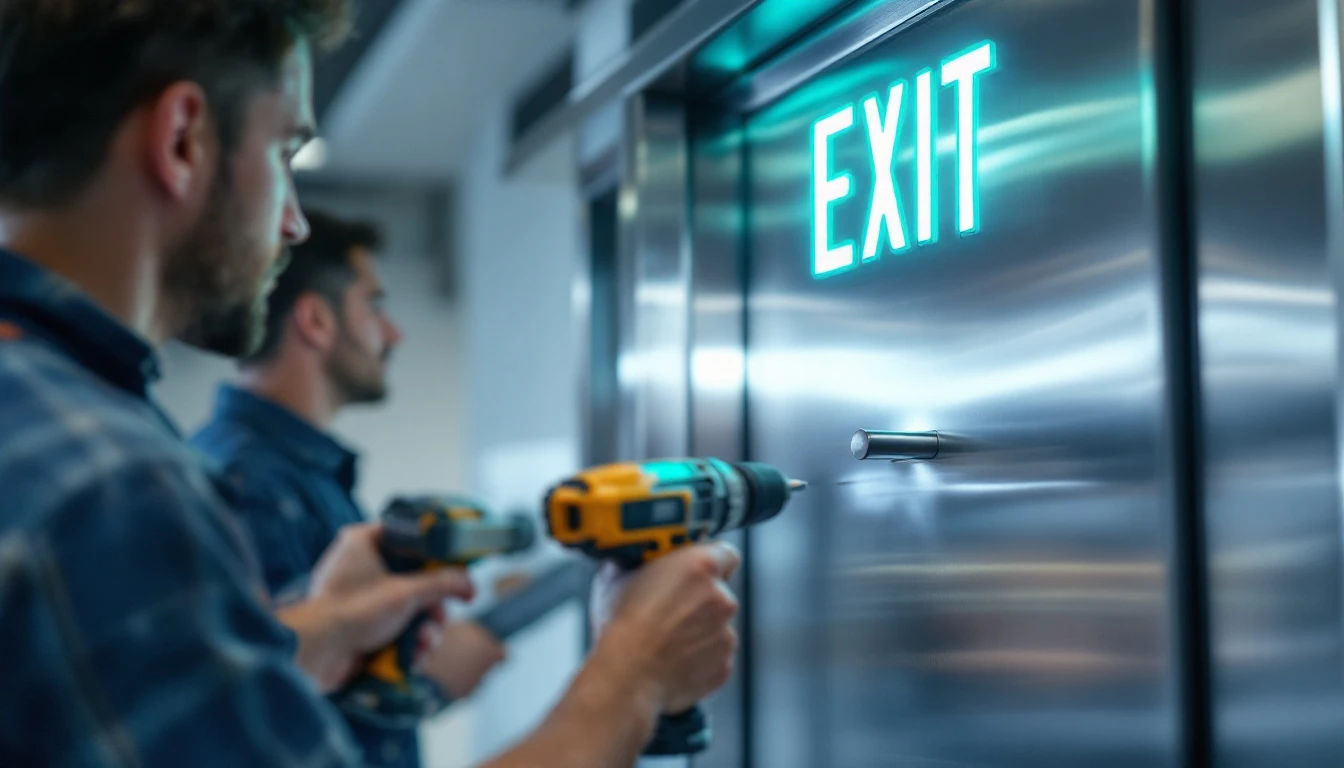
Looking for push bar with alarm installation in Pasadena, you need a local, licensed low-voltage contractor who arrives with the proper hardware on the truck — not a national call center that farms out your job to whoever answers. Los Angeles Access Control designs, installs and services entry systems throughout Pasadena and the surrounding communities, and each project is handled by our employed technicians, start to finish.
Call us directly at (888) 917-9811 to get a no-obligation quote. We pick up seven days' worth of long hours — 6:30 AM to 11:30 PM Sunday–Thursday, Fridays to 4 PM, which means a real person answers your call, not a phone tree.
Serving Pasadena and the San Gabriel Valley
Pasadena sits in the San Gabriel Valley, and our techs work here weekly. From properties near Old Pasadena and the Rose Bowl, or anywhere along the I-110, we arrive already familiar with the construction styles found across the 91107 area — everything from frameless glass entries to steel man doors — so the right brackets, strikes and readers are on the truck before we knock.
In addition to Pasadena, the same crew handles South Pasadena, Altadena, San Marino and Alhambra, which means businesses with several locations enjoy a single point of contact across every site: (888) 917-9811.
Push bar with alarm installation: what we install and service
Every engagement spans the complete chain of hardware: fire-rated panic hardware, mortise and vertical-rod exit devices, alarmed push bars, along with electric latch retraction kits. We don't hand off loose ends — every conductor is labeled, as-builts are delivered, and administrators are trained before we leave.
We work with open, non-proprietary platforms wherever possible, which means you're never locked into one vendor for future parts and service. When a proprietary legacy system is already in place, we can usually take it over, service it, or migrate it in phases.
What "secure" actually requires
A reader on the wall isn't security by itself. What decides it: is the lock's wiring exposed on the unsecured side? Does the door report when it's propped? Are credentials encrypted or clonable? Is the controller on battery backup? Our installs answer all of these by design.
Think about failure modes before they happen: what happens in a blackout, a network outage, a fire alarm, an earthquake — each scenario has a designed response, and we test them before handoff, not improvised during the event.
Our process, step by step
1. Assessment. One of our techs surveys every door, gate and opening in scope, recording construction types, egress requirements and cable routes. This produces an itemized proposal — no vague allowances.
2. Engineering. We select specific hardware per door, calculate power budgets, plan controller and network locations, and verify life-safety compliance before anything is ordered.
3. Installation. In-house technicians — never day labor — pull and label every cable, fit hardware precisely, and keep the site workable with minimal disruption.
4. Programming. Users, schedules and access levels are configured, auto-lock and unlock schedules set, alarm behaviors tuned, and any integrations brought online.
5. Testing and training. Each opening is tested under power loss, egress and forced-entry conditions, and your administrators are trained hands-on — plus written documentation.
6. Ongoing support. We keep your as-builts, programming records and parts list on file, which means future service calls are fast. Maintenance plans are available without lock-in contracts.
Property types we serve in Pasadena
Office buildings — a property type we've equipped many times across LA County, with proven hardware packages ready to quote.
Schools and churches — for which we tailor traffic patterns, user counts and liability exposure, down to schedules and alert rules.
Warehouses and back-of-house exits — a property type we've equipped many times across LA County, with reference sites we're happy to describe.
Restaurants and bars — for which the system is tuned to the way the space is actually used, from credential policy to door schedules.
Have an unusual building? Odds are we've equipped one like it — from marinas to machine shops. Call (888) 917-9811 and we'll talk through options.
Jargon decoded
Fail-safe vs. fail-secure — the lock's behavior on power loss: fail-safe unlocks (required for some egress doors), fail-secure holds (most strikes). Each opening gets the right one per code and risk.
Door position switch (DPS) — a sensor reporting whether the door is physically open or closed, enabling held-open and forced-door alarms.
Request-to-exit (REX) — hardware that detects someone leaving and releases the lock so egress is always free.
Anti-passback — logic that stops one fob from being passed back to admit a second person, common in garages and secured floors.
OSDP — an encrypted, supervised successor to Wiegand that resists skimming and tamper.
Access level — which doors, at which times, for which users. Most messy systems are really access-level design failures.
However you phrase it, this is the page
People describe this work a dozen different ways: owners type "push bar for glass door" or "push bar installation cost", others look for "push bar with alarm installation" and "commercial door push bar installation". Each phrase points at the same job — who can design, install and stand behind this in Pasadena — and this page exists to answer it: Los Angeles Access Control, (888) 917-9811.
Related work we handle under the same roof includes panic bar installation near me, push bar door installation, install push bar on exit door, panic exit device installation and storefront panic bar installation. Combining these in a single project beats hiring for them one at a time — one truck roll, one survey, one accountable vendor.
Why Pasadena calls us first
A real local company. Based at 189 The Grove Drive in Los Angeles, with techs living and working across the county. Service calls get a truck, not a ticket number.
Backed work. Every installation carries labor and parts warranties, honored without arguments.
Transparent pricing. Prices are quoted in writing before work starts. Change orders only happen when you change the scope.
Hours that match emergencies. Available Sunday–Thursday 6:30 AM–11:30 PM and Friday to 4 PM. Because locked-out tenants and failed storefront doors can't wait until Monday.
Specialists, not generalists. Access control, intercoms, buzzers, maglocks and gate entry are all we do — not a sideline bolted onto an alarm company.
No vendor lock-in. Open standards mean you own your system — though most customers never want anyone else.
Mistakes to avoid when buying push bar with alarm installation
Pricing without a site visit. The unknowns get billed later or botched. A real survey protects you — we do them free.
Old cards left active. Takeovers that don't purge unknown credentials inherit every old risk. We audit and purge on every system takeover.
Closed systems. Certain platforms handcuff you to one company forever. Always ask: "who else can work on this?"
Undersized power. The most common root cause of flaky systems we're called to fix — good power is cheap insurance.
No documentation. When the installer vanishes, undocumented systems become hostage situations. Documentation should be a deliverable, not a favor.
Built to code — fire, egress and ADA
Locking a door electrically touches fire code, building code and ADA at once. California's Building Code and Fire Code dictate how locked egress doors must release: motion-sensor REX, push-to-exit buttons, fire-alarm tie-ins and door release on power loss where applicable. Compliance is engineered in before security — security never overrides safe exit.
Accessibility is part of it: reader mounting heights, operating force, auto-operator coordination and clear floor space all factor into reader and hardware placement. Designed-in compliance is free; fixing it after a citation is not.
What does push bar with alarm installation cost?
The honest answer: it depends on the opening count and conditions — and we can pin it down quickly. Cost is driven by: number of doors or gates, what each door is made of, how far and how hard the cable runs are, reader and credential choice, and the locking hardware each opening needs.
As a ballpark: a single-door standalone system is the economy entry point; networked multi-door systems scale per opening; cloud systems trade some hardware cost for subscription; and gates, intercoms and integrations are priced per device. A free site survey produces an exact written quote — book at (888) 917-9811.
What usually goes wrong (and how we fix it)
Exit-only doors that still need outside key access. The right hardware and programming make this a non-issue — often faster than owners expect.
Exit doors that fail fire inspection. The right hardware and programming make this a non-issue — usually in a single service visit.
Back doors chained or deadbolted shut. A properly engineered system eliminates this entirely — usually within one scheduled visit.
Storefronts cited for non-compliant egress. The right hardware and programming make this a non-issue — usually within one scheduled visit.
Left alone, these issues get costlier: an unsecured door invites loss, and a stuck one blocks business. Fast scheduling is the norm at (888) 917-9811.
Equipment standards we trust
Not all credentials are equal: old low-frequency prox is trivially copied, while modern smart cards and phone credentials are encrypted. Part of every survey is a frank read on your current credential security.
Power is the silent failure point: cheap power supplies and neglected batteries cause the majority of mystery faults. Every system we install gets properly sized, battery-backed, supervised power — and every service plan includes battery testing.
How fast can we get there?
Our county-wide routing works in your favor, someone is rarely far from Pasadena. Most repairs land same- or next-day; installation starts are usually within the week of an approved quote. The dispatcher who answers knows the schedule in real time.
After the job, the relationship continues: as-builts and programming records stay in our system, so the next request — a new door, a credential batch, a tenant change — starts warm.
Exactly where we work in and around Pasadena
Dispatches in Pasadena span ZIP codes 91101, 91103, 91105, 91106 and 91107, taking in Old Pasadena and the Rose Bowl plus Colorado Boulevard. Positioned in the San Gabriel Valley, with the I-110 nearby, response windows here are among our best.
Just outside Pasadena, the nearest communities we serve include South Pasadena, Altadena, San Marino, Alhambra and Highland Park. Routes frequently chain these areas together, which is part of why response here stays fast.
Comparing your options
Self-contained locks and keypads is the entry point: right for very small scopes, though it leaves you without real records or remote control.
Server-based systems put every door on one brain: powerful and subscription-free, but someone has to own that server, its backups and its updates. Best for facilities that already have IT staff.
Cloud systems now dominate new installs: remote unlock, instant credential changes and automatic updates with no server to babysit. You pay a subscription, and for most owners it replaces costs they were already paying in service calls.
Unsure which fits? The free site survey settles it — our recommendation is the least system that fully solves the problem, with reasoning you can hold us to. (888) 917-9811.
How to know you need this now
An incident happened and there's no record of who came in — audit trails are the first thing investigators and insurers ask for.
Repairs on the old system are becoming routine — past a point, stabilizing legacy hardware costs more than replacing it.
Insurance, compliance or a client audit is asking questions you can't answer — controlled, logged entry is increasingly a requirement, not a luxury.
Doors get propped because entry is inconvenient — convenience failures become security failures.
You've lost track of how many keys or credentials are in circulation — every unknown copy is an open question about who can walk in.
Any one of these justifies a conversation; stacking several means the risk is live. The call is free: (888) 917-9811.
Push Bar With Alarm Installation in Pasadena: FAQs
Can I get temporary access for vendors, cleaners or contractors?
Easily: vendors receive limited credentials that expire on their own, and every use is logged. The master-key-on-a-hook era ends.
Do you give free estimates?
Yes — site surveys and quotes are free and carry no obligation. You receive a written scope with real hardware and a fixed price up front.
Are you licensed and insured?
Yes. Los Angeles Access Control is a licensed, insured low-voltage contractor working across Los Angeles County, and we pull permits where the jurisdiction requires them.
Do you offer maintenance plans?
Yes — scheduled inspections, battery replacement, firmware updates and priority response, without long lock-in contracts. Plans are optional — the install is built to last regardless.
What if my building already has old wiring from a previous system?
Often good news: we test and reuse healthy legacy wiring, which meaningfully reduces install cost. We verify every run before trusting it — only what fails gets replaced.
Can you integrate with cameras, alarms or my property software?
In most cases, yes — door events paired with video clips, alarm tie-ins, elevator control and property-management integrations are routine for us. We'll inventory what you have and tell you exactly what can talk to what.
What areas do you serve?
All of Los Angeles County — every region, from Lancaster to Long Beach, with daily routes through Pasadena. One quick call confirms coverage: (888) 917-9811.
Can the system lock and unlock doors on a schedule?
Absolutely: front doors can unlock for business hours and secure themselves at close, including holidays and special dates. No more "who forgot to lock up".
Is push bar with alarm installation disruptive to my business while it's installed?
Minimally. We stage work so doors stay usable, schedule noisy or door-down phases around your hours, and leave the site clean daily. Occupied buildings are our normal condition.
Is financing or phased installation available for larger projects?
We phase large projects all the time: secure the critical doors first, add the rest on your budget's schedule, with the design planned so later phases bolt on cleanly.
How fast can you schedule push bar with alarm installation in Pasadena?
Most service calls are scheduled same-day or next-day, and installs usually start within the week. Phones are answered Sunday–Thursday 6:30 AM–11:30 PM and Friday to 4 PM at (888) 917-9811.
Can you service a system another company installed?
In most cases, yes. We regularly take over systems whose installer disappeared — identifying the hardware, recovering or resetting programming, and documenting everything properly so you're never stranded again.
Will the doors still open if the power goes out?
Yes — by design. Egress is always free: hardware is selected per code so people can always exit, and battery-backed power rides through typical outages. Power-loss behavior is part of our commissioning checklist.
What happens when an employee or tenant leaves?
You deactivate the fob, card or phone credential instantly — without touching a single lock. For most owners this alone justifies the switch from keys.
Can I manage the system from my phone?
With cloud-based platforms, yes: unlock doors remotely, grant visitor access, review events and get alerts from wherever you are. Ask for a demo at your survey.
More Magnetic Locks & Electric Strikes in Pasadena
Push Bar With Alarm Installation in nearby cities
Explore
Book push bar with alarm installation in Pasadena
Licensed, insured and local. Fast scheduling across Los Angeles County — written quotes, warrantied work.
Call (888) 917-9811Sun–Thu 6:30 AM–11:30 PM · Fri 6:30 AM–4 PM