
Push Bar Dogging Repair in Los Angeles
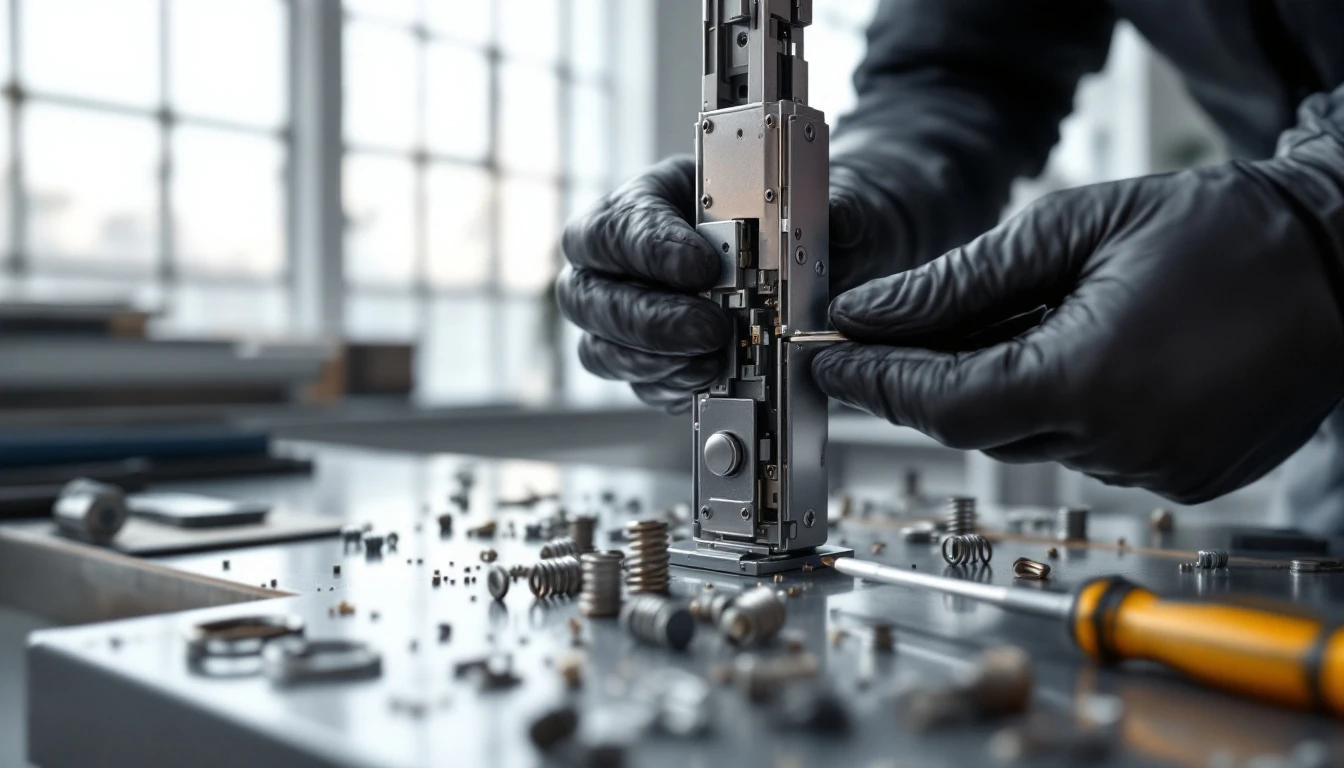
Little frustrates tenants and staff more than entry hardware you can't trust. So Los Angeles building managers turn to Los Angeles Access Control for push bar dogging repair — same-week scheduling, upfront pricing, and installations done to code.
Phone us today at (888) 917-9811 to get a no-obligation estimate. We take calls seven days' worth of long hours — 6:30 AM to 11:30 PM Sunday–Thursday, Fridays to 4 PM, which means a real person takes your call — not a voicemail maze.
Equipment standards we trust
Our bench covers the industry's main platforms: HID readers and credentials, Brivo and Avigilon Alta (Openpath) cloud access control, DoorKing and ButterflyMX entry systems, Axis door controllers, and the trusted locking brands — Von Duprin, HES, Securitron, Schlage. Brand choice follows your building's needs, never to a sales quota.
Behind the walls, OSDP is replacing Wiegand — an encrypted, supervised protocol that closes Wiegand's known holes. If your readers are recent, the upgrade may be mostly configuration; ask us whether your wiring qualifies.
Jargon decoded
Request-to-exit (REX) — hardware that detects someone leaving and releases the lock so exit never requires a credential.
Access level — which doors, at which times, for which users. Most messy systems are really access-level design failures.
Anti-passback — logic that stops one fob from being passed back to admit a second person, common in garages and secured floors.
Credential — whatever unlocks the door: card, fob, PIN, phone or fingerprint. Modern encrypted credentials resist the cloning that plagues older prox cards.
OSDP — the modern, encrypted reader protocol replacing legacy Wiegand wiring closing known attack paths on the reader wire.
Fail-safe vs. fail-secure — what a lock does when power drops: fail-safe unlocks (required for some egress doors), fail-secure holds (most strikes). Each opening gets the right one per code and risk.
Our process, step by step
1. Site survey. A technician walks every door, gate and opening in scope, recording door and frame construction, existing wiring, power availability and network paths. You get an itemized scope and quote — with real model numbers.
2. System design. We pair hardware for each opening, size power supplies with battery backup, plan controller and network locations, and verify life-safety compliance up front.
3. Installation. In-house technicians — never day labor — run cabling cleanly, fit hardware precisely, and work around your business hours so your operation never stops.
4. Configuration. Users, schedules and access levels are configured, auto-lock and unlock schedules set, alerts configured, and integrations (video, intercom, elevator) connected.
5. Commissioning. Each opening is tested under power loss, egress and forced-entry conditions, and your administrators are trained hands-on — plus written documentation.
6. Service after the sale. Your system's documentation lives in our service records, which means any tech we send already knows your site. Maintenance plans are available without lock-in contracts.
Typical applications
Restaurants — for which the system is tuned to the way the space is actually used, from credential policy to door schedules.
Offices — for which the system is tuned to the way the space is actually used, from credential policy to door schedules.
Gyms — where we tailor the way the space is actually used, down to schedules and alert rules.
Retail storefronts — one of our most frequent project types, with reference sites we're happy to describe.
Running something different? We've likely done it — from houses of worship to film stages. Describe it at (888) 917-9811 for a straight answer.
Code compliance, egress and safety
If a bidder never mentions egress, keep interviewing. Electromagnetic locks especially carry strict egress requirements: sensor release, auxiliary push buttons, fire-alarm disconnects and time delays under state code. We design to pass inspection the first time — permits included where the AHJ requires them.
Accessibility is part of it: reader mounting heights, operating force, auto-operator coordination and clear floor space shape where and how devices mount. Getting it right during design costs nothing; fixing it after a citation is not.
However you phrase it, this is the page
People describe this work a dozen different ways: owners type "panic bar repair near me" while others try "panic bar stuck", property managers tend toward "exit door won't open" or "push bar repair". They're all asking the same question — who does this properly across Los Angeles and answers the phone afterward — and the answer is the same local team: Los Angeles Access Control, (888) 917-9811.
Questions that ride along with this one often involve crash bar replacement, panic bar latch repair, crash bar repair, push bar repair cost and push bar not latching. If any of those apply to your property, mention them during the survey — the combined quote is usually the bargain.
Why Los Angeles calls us first
Specialists, not generalists. Access control, intercoms, buzzers, maglocks and gate entry are all we do — not a line item for a general electrician.
Local and accountable. Headquartered at 189 The Grove Drive in Los Angeles, with techs living and working across the county. When something needs attention, we're minutes away — not a ticket queue in another state.
Transparent pricing. The number you approve is the number you pay. Change orders only happen when you change the scope.
Non-proprietary by default. Open standards mean you own your system — and our service keeps you with us by choice, not contract.
Hours that match emergencies. Open Sunday–Thursday 6:30 AM–11:30 PM and Friday to 4 PM. Entry failures don't respect business hours, so neither do we.
Warrantied workmanship. Every installation carries labor and parts warranties, honored fast.
Common Los Angeles push bar dogging repair problems — solved
Push bar not latching so the door never locks. A properly engineered system eliminates this entirely — often within one scheduled visit.
Exit door that won't open under pressure. It's among our most common calls — and we correct the underlying design, not just the broken part.
Dogging feature no longer holding the latch open. A properly engineered system eliminates this entirely — usually in a single service visit.
Vertical rods out of adjustment on double doors. A properly engineered system eliminates this entirely — often in a single service visit.
If any of these sound familiar Phone (888) 917-9811 and describe the symptom — many issues are identified before we even arrive, saving you time on site.
System choices, compared honestly
Standalone systems fit one or two doors with simple needs: self-contained hardware with onboard programming. What you give up is central control — every change means a walk to the door, and reporting is thin.
Networked on-premise systems put every door on one brain: powerful and subscription-free, at the cost of maintaining the server and software yourself. They shine in larger single sites with IT support.
Cloud-managed systems now dominate new installs: manage every door from a browser, updates arrive automatically, and multi-site portfolios live in one dashboard. The subscription is the trade, and for most owners it replaces costs they were already paying in service calls.
Unsure which fits? That's what the free survey answers — our recommendation is the least system that fully solves the problem, and put the reasoning in writing. (888) 917-9811.
Budgeting for push bar dogging repair
Honest answer: it depends on the opening count and conditions — and we can pin it down quickly. Cost is driven by: how many openings, what each door is made of, wiring distance and pathway difficulty, reader and credential choice, and whether locking hardware must be added or replaced.
Be cautious with phone-only pricing: they're either padded for the unknown or destined for change orders. We survey for free, usually in under an hour, and lock your price in writing.
Signs it's time for push bar dogging repair
Nobody can say how many keys exist for your doors — each one is standing access you can't revoke.
People prop doors to avoid fumbling with keys — convenience failures become security failures.
An auditor wants access records you don't have — documented access control is becoming table stakes in many industries.
Something went missing and the entry log is a shrug — audit trails are the first thing investigators and insurers ask for.
Staff or tenant turnover triggers a locksmith visit every time — a modern system makes that a click, not a service call.
One of these alone is reason enough to call; two or more mean you're already carrying risk. A phone consult costs nothing: (888) 917-9811.
Mistakes to avoid when buying push bar dogging repair
Security that traps people. Non-compliant locking fails inspection and endangers occupants. Verify your installer designs for inspection.
Undocumented installs. When the installer vanishes, undocumented systems become hostage situations. Demand as-builts and admin credentials in writing.
Phone-only quotes. The unknowns get billed later or botched. A real survey protects you — ours are free.
Undersized power. The most common root cause of flaky systems we're called to fix — good power is cheap insurance.
Proprietary lock-in. Certain platforms handcuff you to one company forever. Always ask: "who else can work on this?"
What working with us feels like
Our county-wide routing works in your favor, someone is rarely far from Los Angeles. Most repairs land same- or next-day; installs generally begin within days of approval. You'll get real availability on the first call, not a callback.
Follow-through is where contractors are measured: we schedule warranty work with the same urgency as paid work, and the file we keep on your system means nobody re-learns your building on your dime.
The security details that separate good installs from bad ones
Weak points get found: a maglock on a door whose glass sidelite opens with a rock, or a secured front door beside a propped loading dock, is theater. Our surveys look at the building the way an intruder would, so budget goes to actual risk, not visible risk.
Good design assumes bad days: power loss, dead internet, alarm activation — each has a correct, code-driven answer that gets engineered in, and we test them before handoff, not improvised during the event.
Push bar dogging repair: what we install and service
Each engagement covers the complete chain of equipment: vertical rods and bottom bolts, alarm modules and batteries, dogging mechanisms, as well as replacement end caps and touchpads. We don't hand off half-finished systems — every conductor is labeled, as-builts are delivered, and administrators are trained at handoff.
We work with industry-standard, non-proprietary equipment wherever possible, so your building is never hostage to a single manufacturer for future parts and service. When a proprietary legacy system is already in place, we take over, stabilize and migrate it on your schedule.
How we do business
Our commitment on every push bar dogging repair project is simple: punctual arrival, quoted pricing, engineered work and reachable support. That's how a local company earns two decades of referrals across Los Angeles County.
Push Bar Dogging Repair: Frequently Asked Questions
What brands do you install?
Professional, non-proprietary lines including HID, Brivo, Avigilon Alta (Openpath), DoorKing, ButterflyMX and Axis, plus locking hardware from Von Duprin, HES, Securitron and Schlage. We spec to your building, not to a quota.
Can you service a system another company installed?
Usually, yes. We take over orphaned and legacy systems — identifying the hardware, recovering or resetting programming, and documenting everything properly so you're never stranded again.
Can I get temporary access for vendors, cleaners or contractors?
Easily: vendors receive limited credentials that expire on their own, and every use is logged. No more lending master keys.
Is push bar dogging repair disruptive to my business while it's installed?
Rarely. Openings are kept functional during the day, schedule noisy or door-down phases around your hours, and clean up every day. Occupied buildings are our normal condition.
Will the doors still open if the power goes out?
Yes — by design. Egress is always free: hardware is selected per code so people can always exit, and battery-backed power rides through typical outages. We test exactly this during commissioning.
Do you offer maintenance plans?
Yes — preventive visits covering batteries, firmware, testing and documentation, on terms you can cancel. No plan is ever required — the install is built to last regardless.
How long does an installation take?
A single door is typically done in a day. Larger systems scale with door count and wiring difficulty — your written quote includes a schedule, and we keep to it.
Can the system lock and unlock doors on a schedule?
Absolutely: auto-unlock during business hours, auto-secure at night, including holidays and special dates. No more "who forgot to lock up".
Do you give free estimates?
Yes — site surveys and quotes are free and carry no obligation. You receive a written scope with real hardware and a fixed price up front.
What happens when an employee or tenant leaves?
You deactivate the fob, card or phone credential instantly — no rekeying, no lock changes, no cost. That single capability usually pays for the system.
How fast can you schedule push bar dogging repair in Los Angeles?
The majority of repairs are scheduled same-day or next-day, and installs usually start within the week. We answer Sunday–Thursday 6:30 AM–11:30 PM and Friday to 4 PM at (888) 917-9811.
Are you licensed and insured?
Yes. Los Angeles Access Control is a licensed, insured low-voltage contractor performing work across Los Angeles County, and we pull permits where the jurisdiction requires them.
Can I manage the system from my phone?
With cloud-based platforms, yes: unlock doors remotely, grant visitor access, review events and get alerts from any browser or the mobile app. Ask for a demo at your survey.
Do you handle both installation and ongoing service?
Yes — and that continuity is the point. The company that installed your system services it, so every later call is faster and cheaper.
Can you integrate with cameras, alarms or my property software?
Yes — video, intrusion, elevator and PMS integrations come up on most projects. Bring your current system list to the survey and we'll map what connects.
What if my building already has old wiring from a previous system?
Often good news: sound existing cable can frequently be reused, which cuts labor significantly. The survey includes testing what's in the walls — reuse what passes, replace what doesn't.
Do you work on occupied buildings without disrupting tenants?
Yes, most of our work is in occupied buildings. We stage the work so entries keep functioning and coordinate notice with your manager.
Is financing or phased installation available for larger projects?
Phasing is routine: start with high-risk openings and expand by phase, engineered up front so each phase extends, not reworks.
What happens to my system if your company weren't around?
We invite that question: open platforms, delivered documentation and your own admin access mean any qualified integrator could take over. Lock-in isn't our retention strategy.
What areas do you serve?
All of Los Angeles County — every region, from Lancaster to Long Beach, with daily routes through Los Angeles. One quick call confirms coverage: (888) 917-9811.
Related services
Push Bar Dogging Repair near you
Ready for push bar dogging repair?
Licensed, insured and local. Fast scheduling across Los Angeles County — written quotes, warrantied work.
Call (888) 917-9811Sun–Thu 6:30 AM–11:30 PM · Fri 6:30 AM–4 PM